USSD for business in Nigeria: when to use it and how to design it well
Why USSD reaches customers apps can't, what Nigerian businesses and schools use it for, and the design rules that make USSD payments work.
Apps get the attention, but USSD gets the reach. Every mobile phone on every Nigerian network can dial a short code, with no smartphone, no data and no app download. For many customers, that makes USSD the only digital channel they will actually use.
What USSD is good for
USSD works best for short, structured interactions:
- Payments and collections: paying fees, bills, dues and contributions.
- Balance and status checks: wallet balances, fee balances, order and application status.
- Result checks: letting parents or students check results from any phone.
- Registrations: signing up for a service, an event or a programme.
- Surveys and polls: quick questions that reach people apps never will.
- Promotions: entering a campaign, redeeming a code.
It is not good for long forms, browsing, images or anything that needs more than a handful of steps.
How a USSD service works
- A customer dials a short code.
- The mobile network passes the session to a licensed aggregator, which forwards each step to your USSD application.
- Your application replies with the next screen of text.
- The customer responds with a number, and the loop continues until the session ends.
Behind the scenes, your USSD application talks to your real systems: your payment platform, your customer database, your school management system.
The constraints you design around
USSD is unforgiving, and good services are built around its limits:
- Short screens. Each screen holds very little text, so every word has to earn its place.
- Sessions time out. If your backend is slow, the session drops and the customer has to start again. Responses must be fast.
- No going back easily. Customers can't scroll or search, so menus must be shallow and predictable.
- Numbers only, mostly. Choices are made by typing a digit. Free text is possible but error-prone.
Design rules that work
- Put the most common action first. If 80% of people dial to pay fees, "1. Pay fees" is the first option.
- Keep journeys to three or four screens. Every extra screen loses people.
- Confirm before charging. Show the amount and what it is for, and ask for a clear "1. Confirm".
- Remember who the customer is. The network tells you the phone number; use it to skip identification when you can.
- Confirm by SMS. After a payment or registration, send an SMS receipt the customer can keep.
- Measure drop-off. Track where sessions end, and simplify the screens where people give up.
USSD for schools
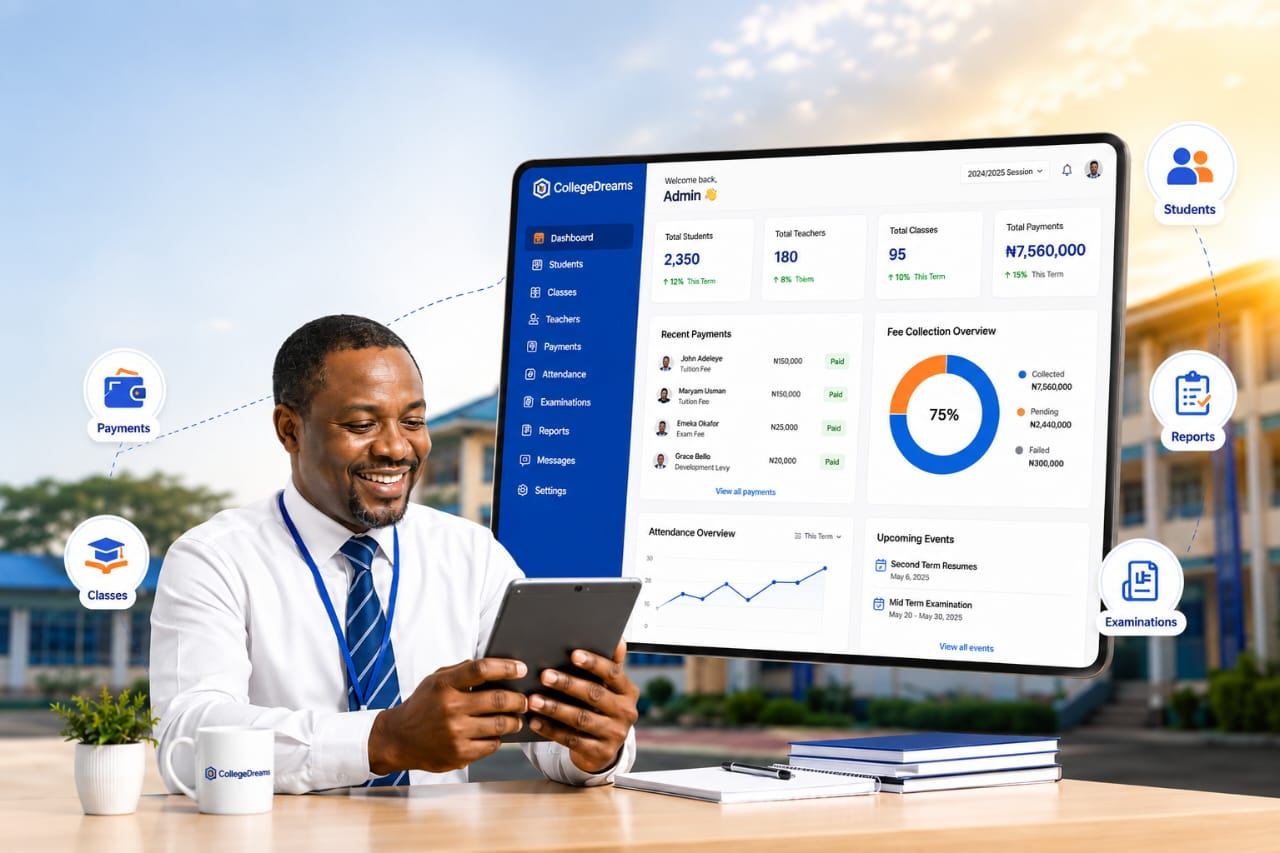
For schools, USSD is a practical way to reach parents without smartphones or data: paying fees, checking balances or confirming results. Combined with a school's management system and payment platform, a parent can pay from a basic phone and the payment lands against the right student, just like an online payment would.
Getting a short code
Short codes are provided through the mobile networks and licensed aggregators. Your development partner builds the USSD application and works with you and your aggregator to connect it to the code.
How we can help
We design and build USSD solutions connected to real backends, including payments through Penney. If you want to reach customers who aren't on your app, talk to us.