Custom software or off-the-shelf? A guide for Nigerian businesses
When a Nigerian business should buy ready-made software, when it should build custom software, and how to choose and work with a software development company.
Sooner or later every growing business hits the limits of spreadsheets and WhatsApp groups. The next question is whether to buy software that already exists or have software built for you. Both can be the right answer. This guide helps you decide, and then choose a development partner if you need one.
When off-the-shelf software is the right choice
Buy ready-made software when:
- Your process is standard. Accounting, email, payroll and basic CRM work much the same everywhere.
- Good local options exist. Software that already supports Naira, local banks and Nigerian tax rules saves a lot of pain.
- You need it next week. Off-the-shelf tools can be running in days.
- The software isn't your advantage. If customers don't choose you because of how you do this thing, don't spend money making it unique.
When custom software makes sense
Build when:
- Your process is your advantage. The way you serve customers, price, schedule or deliver is what sets you apart, and generic software would force you to work like everyone else.
- Nothing fits Nigerian conditions. You need NIBSS or local payment providers, USSD, SMS, or behaviour that holds up on patchy mobile networks.
- You are gluing too many tools together. Staff copy data between four systems every day, and mistakes creep in at every step.
- You are building a product. If the software is the business (a platform, a marketplace, a SaaS product) you need to own it.
- Licence costs scale badly. Per-user fees that were cheap at 10 staff become painful at 300.
The hidden costs on both sides
Off-the-shelf tools come with subscription costs that rise with your size, workarounds for the features they don't have, and data you may not fully control. Custom software comes with a larger upfront cost and the need for ongoing maintenance, hosting and support. Compare the cost over three years, not just the first invoice.
A middle path: integrate
Often the best answer is both: keep standard tools for standard jobs and build a thin custom layer that connects them, such as a customer portal, an integration with your bank or payment provider, or an internal dashboard that pulls everything together.
How to choose a software development company
Whoever you hire, ask these questions:
- What have you built that is still running? Launches are easy; systems that have run for years are the real evidence.
- Who will actually work on my project? Meet the engineers, not only the salespeople.
- How do you deliver? Look for working software early and often, not a big reveal after six months.
- What happens after launch? Hosting, monitoring, backups, security updates and support should be discussed before you sign.
- Who owns the code and the data? Make sure you do.
- How do you handle payments and personal data? Anyone building in Nigeria should understand payment reconciliation and the Nigeria Data Protection Act.
What a good first engagement looks like
A sensible project starts small: a discovery phase to understand the problem, a clear scope and plan, and a first release that solves the most painful part of it. Then you build on it. That keeps risk low and lets you judge the team on real results.
Working with MWare
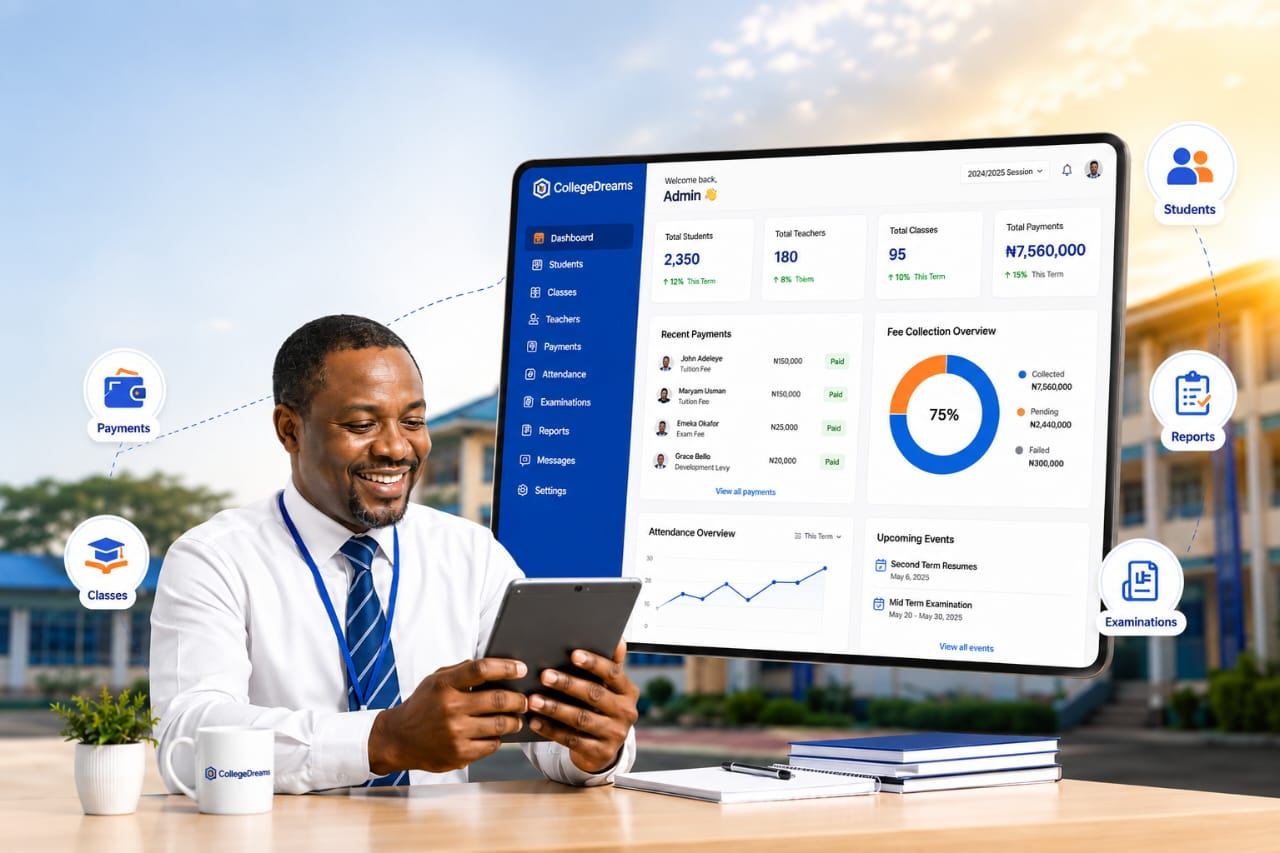
MWare is a software development company in Nigeria, based in Lagos. We build web platforms, portals, APIs, payment integrations, USSD services and mobile apps, and we run our own products, CollegeDreams, Penney, LINA and Stocka, in production every day. If you are weighing up build versus buy, talk to us; we will tell you honestly if off-the-shelf is the better answer.